The Strategic Environment and Supporting the Warfighter
Understanding the current strategic environment is critical to our roles and readiness. We are vital contributors to the mission of defending our nation in an increasingly complex strategic environment. Today’s world is shaped by global power adversaries, where nations like China and Russia challenge U.S. interests through military, technological, and economic means. There are increasing threats to our Homeland and national interests in the areas of finance, air, space, rockets, nuclear, Weapons of Mass Destruction, and cyber. To meet these challenges, the Air and Space Forces have structured long-term strategies to restore peace through strength by reviving our warrior ethos, rebuilding our military, and reestablishing deterrence.
Let’s consider our roles and then simplify what we can do day-to-day. DAF personnel are assigned around the globe to support the warfighter and our nation’s goal to deter, and if necessary, prevail in any future conflict. We directly support the mission by filling roles that impact policies, decisions, acquisitions, and production. Every role—whether in logistics, cybersecurity, engineering, or finance—supports the Air and Space Forces in responding to evolving threats. Your expertise and commitment will help ensure our force remains ready, resilient, and dominant in a rapidly changing global security landscape.
What’s required of each of us is simple, know or learn about our jobs and do them well, understand how our daily tasks and decisions support and impact the overall mission and be prepared for change. Our hope is this information will help us have a sense of urgency and purpose in our warfighter support roles.
Please click below to view a 3-minute video that will help you consider your important role in supporting the warfighter.
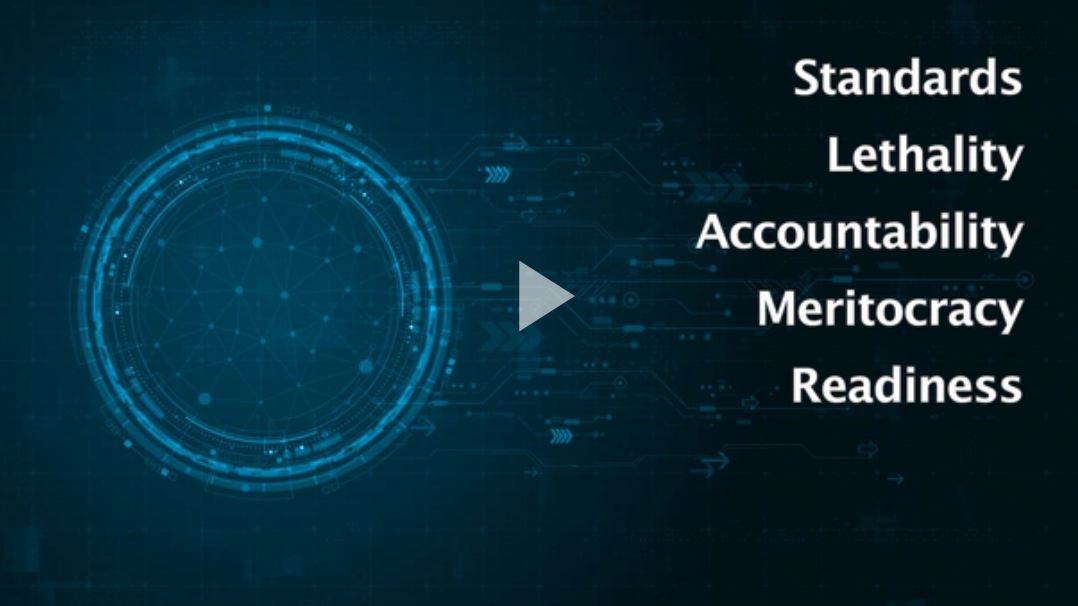
Please click the image below to view the slides and find out more about warrior ethos and your important role in supporting the warfighter

To learn more about how Mission Command affects you as a civilian in your particular position, talk with your supervisor or commander.
To better understand how we can adapt and embody this warrior ethos in our current roles, it is often helpful to look to the past for inspiration. History provides powerful examples of leadership and doctrinal innovation that can directly inform our approach to today’s complex strategic challenges. One such lesson in leadership and organization comes from World War II.
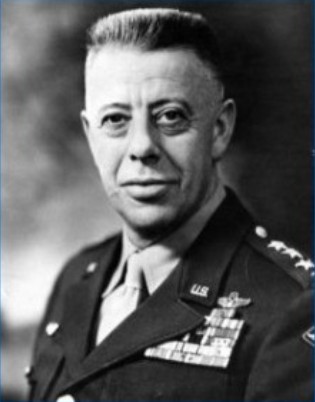
Air University's LeMay Center highlights General George C. Kenney as a Doctrine Paragon for his leadership and organizational command and control of the Far East Air Forces in the Southwest Pacific Area during World War II. His experience and solutions provide insights into some of the problems our Air Force is trying to solve today.
The Problem: General Kenney took command of the Allied Air Forces in the Southwest Pacific Ara in July of 1942. At the time, Japanese forces had pushed the Allies to the southern coast of Papua New Guinea and controlled a significant portion of the islands south of the Philippines. Allied forces were spread over a vast operation area, characterized by large expanses of ocean dotted with reefs and small jungle islands. General Douglas MacArthur, Supreme Commander of the Southwest Pacific Area, was dissatisfied with the performance of his air forces which struggles to gain air superiority and were fighting with inferior equipment to their Japanese counterparts. Eventually, General MacArthur's staff began giving direct orders to the air forces in the execution of operations. The effectively centralized all air campaign planning and execution functions at MacArthur's headquarters in Brisbane, Australia- over 1,000 miles away from the fight. Kenney realized significant change was needed to turn the tide in the skies over Papua New Guinea and push Japan back toward the Philippines.
The Solution: Kenney began by building trust with MacArthur and building relationships with MacArthur's staff. He also empowered his deputy commander, Brigadier General Ennis Whitehead, to plan and execute air operations from a forward location in Port Moresby, Papua New Guinea. Meanwhile, Kenney coordinated with MacArthur's staff and the Pentagon from his headquarters in Australia. To overcome difficulties with command and control (C2) over the larger operating area in the southwest Pacific, Geneal Kenney divided his forces into smaller units known as Air Task Forces (ATF). These ATFs were task-organized units, designed to accomplish a mission in a smaller part of the operating area. The ATFs were created with all necessary elements to complete a specific task, such as C2, ISR, strike, fighter escort, maintenance, engineering, and combat service support.
Kenney issues his ATFs mission type orders (MTO) with clear commanders' intent. He then empowered them to plan and execute the mission as they saw fit, all while coordinating with other ATFs nearby. Kenney's MTOs established a clear priority of effort for the ATF and the necessary supported and supporting relationships. Kenney's staff supported the ATFs by sharing relevant intelligence information and providing the ATF organic C2 and ISR assets to enable them to complete their missions. This allowed the ATFs in remote island locations to effectively fight against the Japanese in a dynamic and evolving theater with limited capability to communicate back to their headquarters. As a result, Allied Air Forces in the Southwest Pacific Area established air superiority and began interdicting Japanese forces in the area. This led to the "island hopping" campaign that ultimately allowed the Allies to retake the Philippines and enabled attacks on the Japanese mainland.
Why it Matters Today: Why it Matters Today: General Kenney's leadership provides a powerful historical blueprint for how vital our support roles are to the warfighter. He understood that for Allied forces to prevail, the warfighters on the front lines needed dedicated and empowered support. His solution—the Air Task Force (ATF)—was successful because each one was a self-sufficient unit containing all the necessary supporting elements, from maintenance and engineering to logistics and intelligence. This is a direct parallel to our work today. Whether we are in finance, acquisitions, or cybersecurity, our daily tasks are the backbone that enables the warfighter's success. Kenney's model proves that when we effectively provide our expertise and resources, we equip our forces to be more lethal, resilient, and capable of winning in any environment.
For more information on General Kenney and concepts such as the ATF, check out the latest Air Force Doctrine Podcast episodes: "Deciphering Doctrine- Ep15-VCSAF General Slife on the Biggest Changes to the AF Since Its Inception: ATFs, AFFORGEN, MCA, Strategic Environment", and "Lessons Learned in Doctrine- Ep7-General Kenney: Leadership (Mission Command), C2, Air Task Forces, Relationships, and Logistics in the Pacific WWII", available at www.doctrine.af.mil and on iTunes, Spotify, Amazon Music, and DVIDS.