Useful Fiction, is an analytical tool that deliberately blends rigorous nonfiction research with engaging storytelling. It bridges the gap between academic reports and creative narrative to help organizations visualize, plan for, and prepare for the future. Useful Fiction is designed to allow the audience to "experience" the research, as well as "feel" its effects. Narrative engages both the left and right sides of the brain. It not just enhances understanding, but also creates emotional connection, and that emotion then provokes action. In turn, that target audience is then more likely to share a story with others — thus becoming part of the campaign to spread the information.
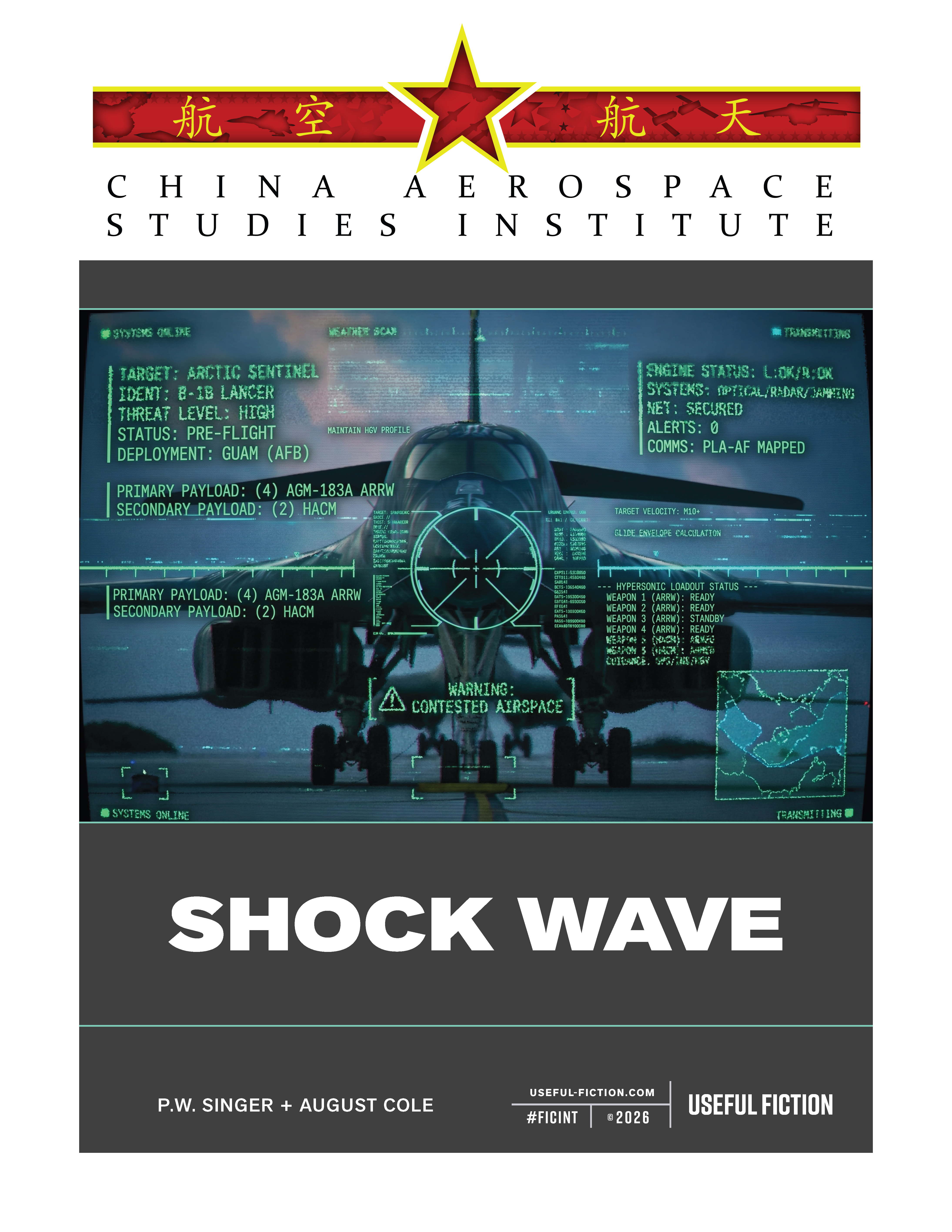
This project takes a look into the future and describe, from the PLA’s point of view, the outcome of a potential future engagement and the impact that increased investment in hypersonic testing and development here in the U.S. would have on that future scenario.
What you need to keep in mind is that not only is this fiction, but it is 100% out of line with reality today. If we want this future, we need to act now.
The following fictional PLA memo is written from the perspective of a Colonel in the People’s Liberation Army Intelligence Bureau of the Joint Staff of the Central Military Commission. It takes the form of an urgently written “future artifact” intelligence report following a surprise U.S. Air Force exercise centered on deploying hypersonic missile-equipped aircraft across Guam, Tinian, and Saipan. This deployment has stunned the PLA, as its leaders believed the Air Force’s hypersonic research, development, and testing was stymied by underfunded research, technological gaps, and a lack of prioritization.
In this imagined future, the U.S. took a different path than the Air Force’s current trajectory of developing hypersonic missiles; accordingly, the PLA must revisit its strategic assumptions and plans.
Though this narrative showcases a successful strategic impact of fieldable Air Force hypersonic capabilities, today’s reality tells a different story. A lack of investment, urgency, and bureaucratic focus is presently leaving the U.S. lagging behind China’s hypersonic weapons development, a gap that risks widening as new generations of even faster Mach 5+ missiles become technically possible.
Click here for SHOCK WAVE
CASI would like to thank the team at Useful Fiction for their work on this project.