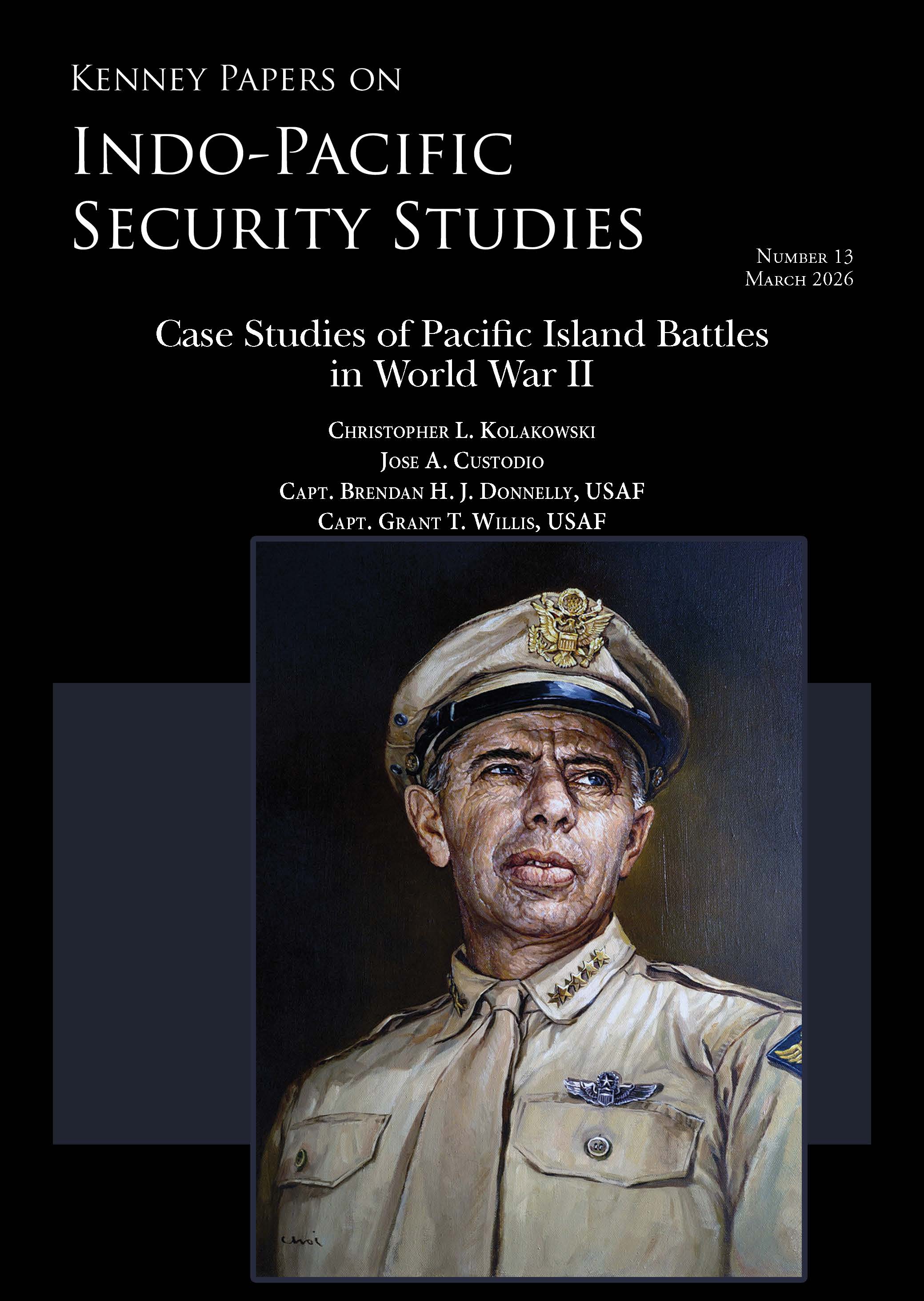
 This study draws strategic lessons from World War II to assess the implications of a potential Chinese invasion of Taiwan. It begins by recalling how the Allied victory over Nazi Germany and Imperial Japan reshaped the global order, emphasizing the scale and complexity of Pacific amphibious warfare. Today, rising influence from the People’s Republic of China and its territorial claims in the South China Sea, East China Sea, and over Taiwan present a comparable strategic challenge in the Indo-Pacific. The prospect of a Chinese invasion of Taiwan raises urgent questions about operational requirements, US military responses, and broader consequences for regional stability and global economics. To address these issues, the study examines four major Pacific War campaigns—Guadalcanal, Bougainville, the Philippines, and Okinawa—to identify enduring themes. Central among them is Joint All Domain Operations (JADO), integrating air, land, sea, cyber, and space power. The analysis also highlights the decisive roles of readiness, logistics, airpower, and geography in determining success or failure.
Author(s) • Christopher L. Kolakowski; Jose A. Custudio; Capt Brendan H. J. Donnelly, USAF; Capt Grant T. Willis, USAF
Year • 2026
Pages • 85
ISSN • 2770-12981
AU Press Code • KP-13